

Xylitol
Product Offerings
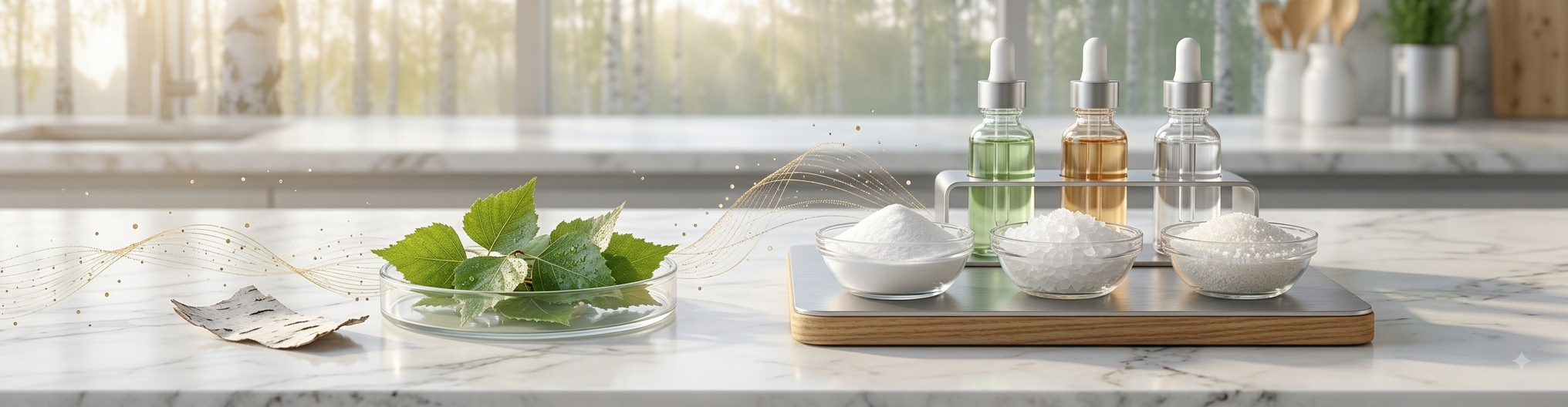
Grade: Xylitol DC, Xylitol crystal
- Appearance: White to off-white free flowing powder, with excellent compressibility
- Mesh size: 20-80
- M.P. & B.P.: Melting Point is 94-96℃ while Boiling Point is 216°C.
- Solubility: 1.6g/ml, Easily soluble in water
- Stability: Very stable, applies in all the food system
- Application: Since DC Xylitol has excellent compressibility and extensibility, so it is mainly used for making tablets. It is also used as Diluent to impart sweetness and Binder to impart hardness to tablets.
- Appearance: White crystals which resemble sugar
- Sweetness: As sweet as sugar with only 40% lesser calories than sugar
- Mesh size: 10-100 and 100-200
- Solubility: 1.6g/ml, easily soluble in water and slightly soluble in ethanol and methanol
- Stability: Very stable, applies in all the food system, pH value of 5.0-7.0
- M.P. & B.P.: It has melting point of 91℃ – 96℃ and a boiling point of 216℃
- Mouthfeel: As it absorbs heat when dissolving in water, so when it is eaten in solid form, one will have a happy and cool mouthfeel.
- Application: Crystal Xylitol has the following applications:
- In food and beverage industry, like: Sugar-free products, Chewing gum, breath mints, confectionary, chocolate, table sugar, soft drink etc
Oral hygiene products(mouthwash and tooth paste)
- Pharmaceuticals
Dietetic products
- Cosmetics
Why Herboveda India?
- Non-GMO raw material certificated from SGS, and examined several times one year.
- No pesticide residue
- Purified water used during all the process
- Good taste, no bitter after tasting
- Passes all microbial tests
- GMP Production Line
- Proprietary Processing Technology
- Sophisticated QC Lab (sample COA available)
- Competitive Pricing
- Superior Food Grade Packaging
- Ready Availability
- ISO9001, ISO14001, ISO22000, OHSAS18001, SA8000, NON GMO, KOSHER, HALAL Certified.
- Product Recall System

Xylitol – Overview
In 1983, Xylitol was pronounced as a safe sugar free sweetener by World Health Organization and the Food and Agriculture Organization of the United Nation. Since then, it became an important supplement and was started being used in gums, cooking, baking, or as a sweetener for beverages. While it contains about 40% lesser calories and 75% fewer carbohydrates than sugar, Xylitol’s sweetening power is the same as that of the sucrose. It looks, tastes and feels exactly like sugar and leaves no repulsive aftertaste.
Xylitol is primarily a natural substance found in gristly fruits and vegetables as well as in corn cobs and various hardwood trees. While sugar can mess up our system, Xylitol rebuilds and restores our bodily systems. Its five carbon sugar property makes it impossible for the bacteria to feed on it. Xylitol is non-fermentable and its long-term use suppresses the most detrimental strains of oral bacteria.
History
Xylitol was first discovered by German Chemist Emil Fisher and French Chemist M.G. Bertrand, but it became significant in the early 70’s when Finnish researchers found that it exhibits Superior Dental Benefits. Xylitol sweetened chewing gums and mints are great Finnish Inventions. Industrialized Xylitol manufacturing began in Finland and the first Xylitol chewing gums and mints in the world were produced in Finland. This invention soon became a daily health habit in every Finn’s life.
Xylitol is formed from the Greek words “xylon” meaning hardwood, and “oli” which refers to the terminology of organic chemistry. From a chemical standpoint, Xylitol is a sugar alcohol, and not actually a sugar. Unlike other polyol (sugar) sweeteners, Xylitol has a five-carbon structure, which means it is antimicrobial (prevents the growth of bacteria). While sugar is acid-forming, xylitol is alkaline enhancing. This is the key reason why Xylitol has been proven to be the only sweetener that shows both passive and active anti-cavity effects.
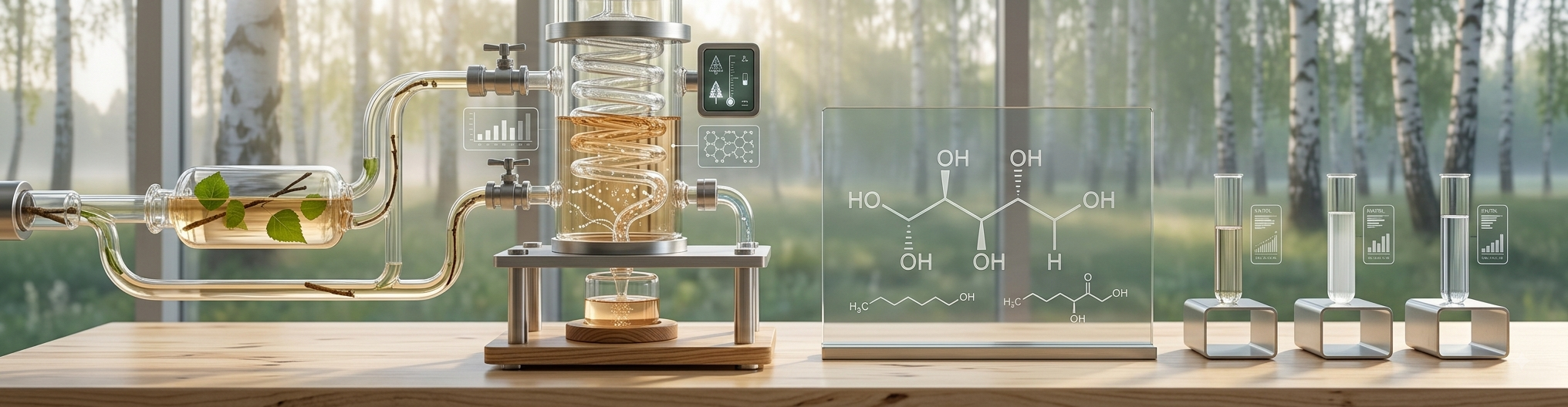
Xylitol is naturally present in many fruits and vegetables, as well as in corncobs and various hardwood trees like birch. It can be said that Xylitol has been a natural component of mankind’s diet throughout the years. Xylitol is also produced by the human body, from 5 to 15 grams per day as an intermediate in the normal metabolism of glucose.
Benefits
Xylitol is known to have a many health benefits associated with its use
Xylitol is not easily converted to fat. Because it is not easily converted to fat, it has almost no effect on insulin levels, making it a safe sugar alternative for diabetics, body builders, dieters, pregnant/nursing women, and also for babies and children.
Since Xylitol is a non-fermentable sugar, it cannot be converted to acid by oral bacteria. Thus, the alkaline-acid balance in the mouth is maintained, which helps in preventing cavities.
Chewing Xylitol gums can also help in prohibiting certain bacterial growth to help prevent ear infections in young children. It will also help clear out earwax and prevent the growth of harmful bacteria in the pharyngotympanic tubes, connecting the nose and ear.
Xylitol helps prevent bad breath, ulcers, and stomach cancer by slowing down the growth of Candida Albicans (a serious yeast infection), and other harmful bacteria like H. pylori.
According to research from the University of Oulu in Finland, xylitol was shown to help improve bone density in rats. This indicates it has potential as a treatment for osteoporosis in humans.
In addition to preventing cavities, consuming xylitol in small amounts helps decrease plaque formation, and promotes salivation to prevent “dry mouth”, which aids in enhancing mineral absorption for repairing damaged tooth enamel, while increasing tooth strength.
Xylitol, when taken in small amounts, can help increase the white blood cell activity in fighting bacterial infections, to help build immunity, protect against chronic degenerative disease and have anti-aging benefits..
When used as a nasal spray, Xylitol is said to be able to help reduce the prevalence of sinus infections, asthma and allergies. It helps decrease the amount of harmful bacteria that may be in the cells of our nose.
Xylitol may help lower your risk of developing ovarian cysts, polycystic ovarian syndrome (a condition that disrupts or stops the ovulation cycle), fibroids, endometriosis, premenstrual syndrome and possibly breast cancer.
Applications & Usage
Approved by the US Food and Drug Administration (FDA) in 1963, Xylitol is sugar’s mirror image without its lethal effects on our body. This natural sweetener has come a long way and helps us build immunity, protects us against chronic degenerative diseases and has anti aging benefits. Thus it is now being used in the below mentioned food and medical applications:
- To produce gum, chewing gum, toffee, soft candy, jelly, chocolate, chewing tablet and etc, since it cools the throat, cleans the teeth and is anti-cariogenic Can replace sucrose in soft drink, milk, bread, preserved fruit, biscuit, yoghurt, jam, porridge and etc, to keep longer & better sweet taste because of its non-fermentability by yeast.
- Since Xylitol has no sticky feeling and is refreshing, it can be address to cosmetic products and toothpaste. Xylitol can keep moisture and improve the rough skin similar to glycerin.
- Being a good substitute to sucrose, it can also be used to make dishes like sour & sweet pork or fish; safe for diabetics.
Xylitol is capable of inhibiting corrosion. Long-term retention of xylitol in mouth can effectively prevent tooth decay. According to such a characteristic, xylitol is extensively applied in gum confection, chewing gum, candy and chocolate, etc.; in Japan, xylitol is broadly applied in pharmaceuticals and cosmetics, and the gum confections which take xylitol as their sweetener are specially designed for dental patients.